Every jar the house releases travels with a certificate. It is a single sheet, printed once, and it names three numbers: the crocin, which is colour; the picrocrocin, which is flavour; and the safranal, which is aroma. Each is measured by absorbance at a specified wavelength on a solution of one percent saffron in water, and each is bounded, for Category I, by a floor that only serious spice clears.
The three measures
Colour is what the eye reaches first and what the hand tests most quickly — a pinch dropped in warm water yields, within a minute, a signature yellow that is not gold and not amber. The number behind it, the crocin reading, is the certificate's headline; for our lots it lives comfortably above two hundred and fifty.
Aroma is the second measure and the most easily lost — safranal is volatile, and a mishandled harvest, or a harvest stored too warmly, will read on the sheet as a dulled number and on the palate as a dulled dish. Flavour, the third, is the measure the kitchen ultimately trusts: picrocrocin carries the faint bitterness that lifts a broth from sweet to serious.
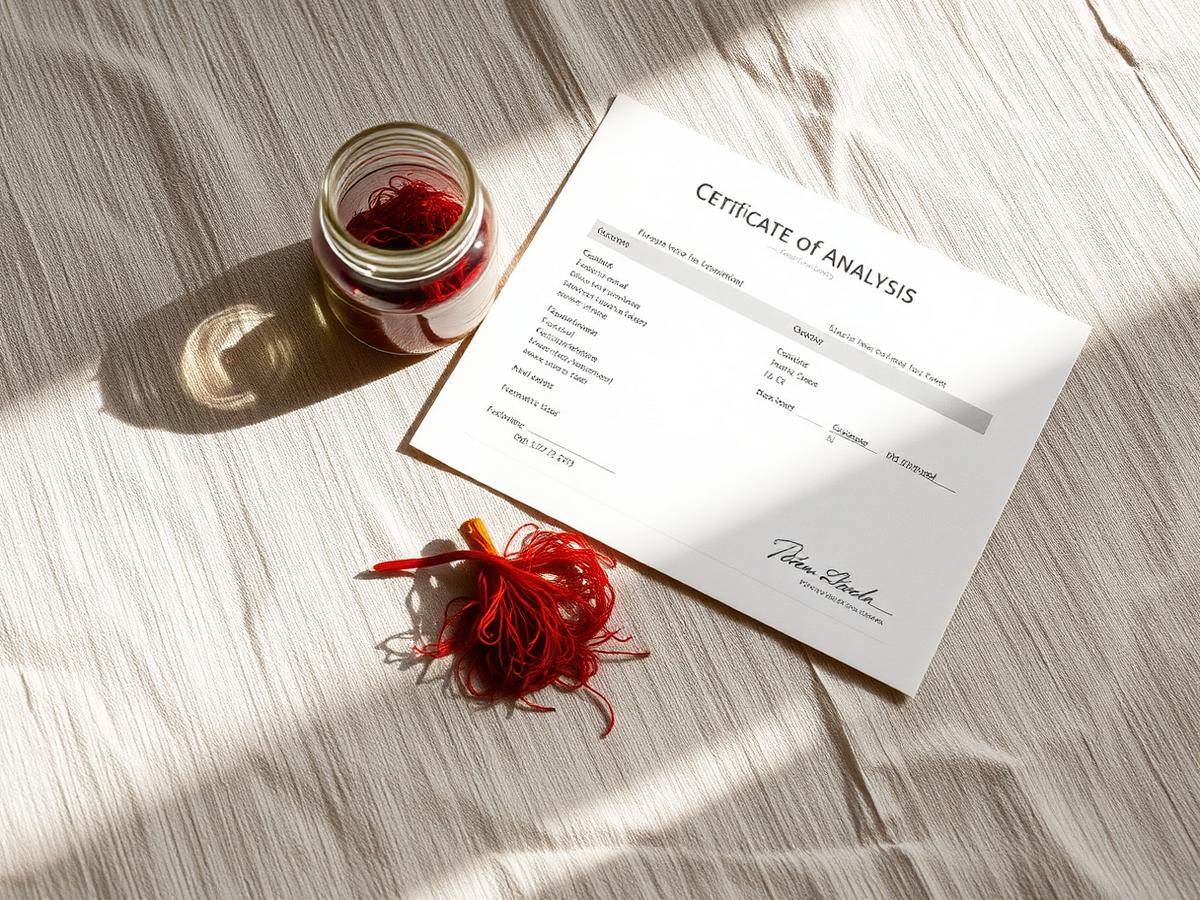
A certificate is not a marketing document. It is a record — dated, signed, keepable — and it is the reason we number our lots and keep the register open to any reader. Read it slowly. It repays reading.