The crates arrive at the atelier in the middle of the morning, always in the middle of the morning, because the light is best then and nothing about this work is done under artificial light. They are opened without ceremony. The threads are poured onto a plain oak table in three low mounds, and the room goes quiet for an hour while three of us read them.
We are looking, first, for what does not belong: the pale end of a thread, the fragment of style, the occasional filament that has bruised in transit. These are set aside without discussion. Second, for uniformity — length, colour, the small resistance a thread offers when lifted. The house's grade is not decided by a laboratory; the laboratory confirms what the table already knows.
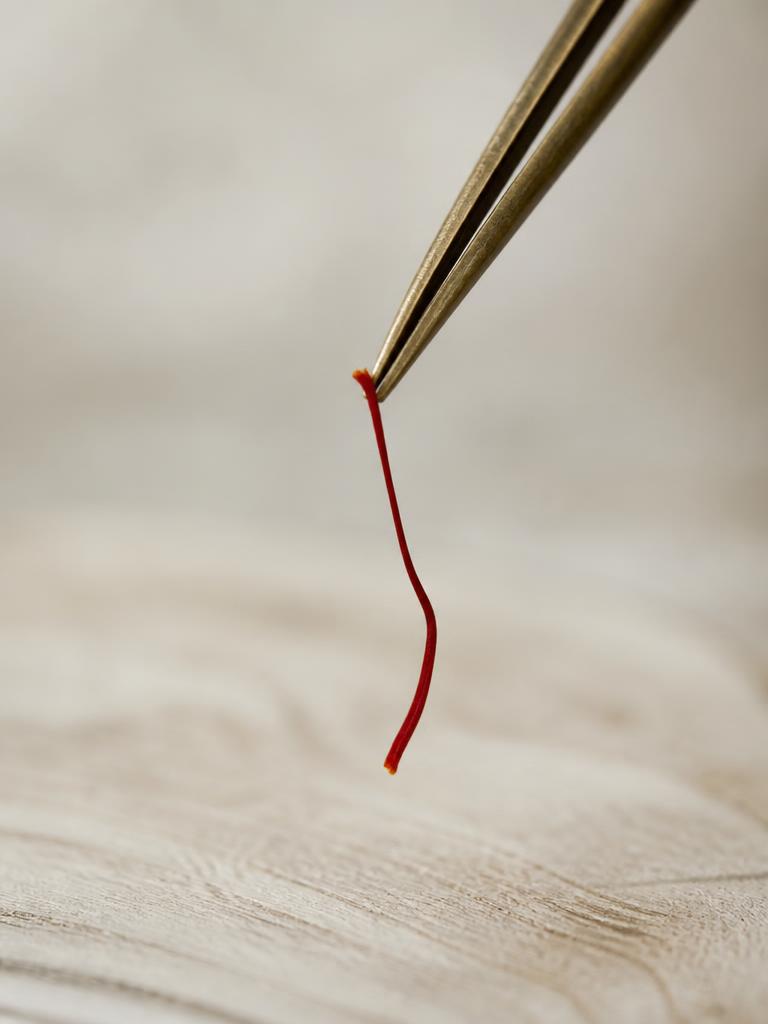
By early afternoon the sorted mound is smaller than the arrived one, sometimes by a fifth, sometimes by less. What is set aside is not waste and is not sold under another name; it stays in the atelier, and we cook with it at home. The jar that leaves the room is the one we would have kept.